The one movement of the Carnival its composer allowed to be played in his lifetime.
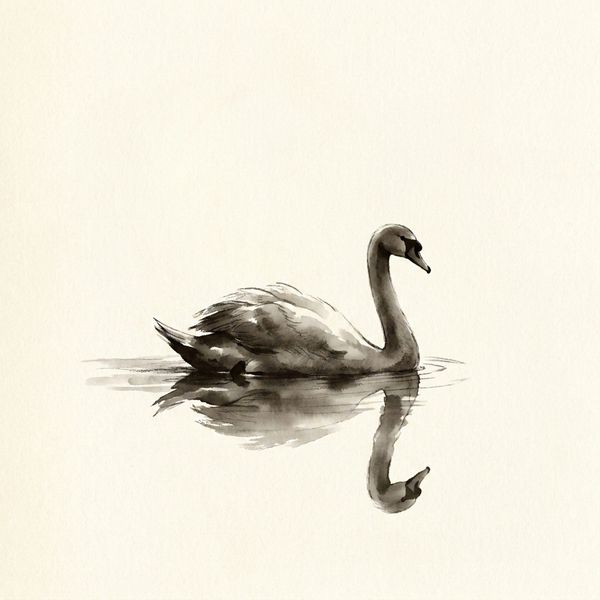
Saint-Saëns wrote Le Carnaval des animaux in 1886 as a private joke for a carnival concert — fourteen short movements in which pianists become kangaroos, double basses become an elephant, and one number mocks his fellow composers outright. He thought it would damage his standing as a serious musician and forbade its publication while he lived. The single exception he made was the thirteenth movement, Le Cygne — the swan — which was printed on its own and became far better known than the suite it came from.
In the original a cello plays one long, unbroken melody in G major while two pianos ripple beneath it. Fokine’s 1905 solo for Anna Pavlova, The Dying Swan, was made on this music, and after that the piece belonged to the ballet as much as to the concert hall.
Written for cello with two pianos. A solo-piano version is an arrangement, and the arranger decides how hard it is.
On the piano everything depends on the arrangement, because one player has to cover what three originally did. The melody is the easy part to read: slow, long-breathed, mostly stepwise. The accompaniment is the work — a continuous ripple of even sixteenths that must stay soft and absolutely regular without ever intruding on the tune above it, and in a solo version part of it will be sharing a hand with the melody.
Practise the two elements apart for as long as it takes: the ripple alone until it is boringly even, the melody alone until it phrases like a singer. Only then put them together, slowly. An even accompaniment at half speed sounds far better than an uneven one at tempo.
No levelled arrangement for this one yet — you play the score as it stands, with the app's tempo control, wait mode and one-hand practice to get you there. Levelled arrangements are added a curated batch at a time. See the Library