The most played of Beethoven’s sonatas — and the movement everyone means by it is a slow one.
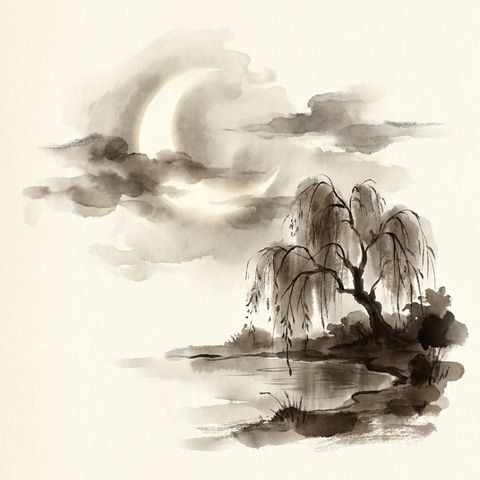
Beethoven finished this sonata in 1801 and published it the next year as the second of two he called Sonata quasi una fantasia — a sonata, almost a fantasy. The label was a warning: the piece does not begin the way a sonata is supposed to. Instead of a brisk opening movement there is a slow, unbroken Adagio sostenuto, and the storm is kept back for the end. The nickname is not his. A German poet, writing five years after Beethoven’s death, likened the first movement to moonlight on Lake Lucerne, and the name attached itself to the whole sonata.
It is that first movement people mean when they say “Moonlight”. The right hand plays a continuous stream of triplets from the first bar to the last, and the melody — in dotted rhythm, a few notes at a time — sits on top of that stream in the same hand. Underneath, the left hand holds slow octaves. Nothing hurries and nothing stops; the movement is one texture, sustained for some five minutes. The two movements that follow, a short, almost cheerful Allegretto and a furious Presto agitato, are rarely heard from the same player as the opening, because the finale is a virtuoso piece and the Adagio is not.
The first movement comes within reach earlier than most famous Beethoven, and that is exactly what makes it hard: nothing distracts from the sound you are making. One hand has to keep the triplets even and quiet while singing the melody above them with its own outer fingers — a problem of balance rather than speed. Pedal changes have to follow the harmony, not the bar. And because the tempo is slow, every unevenness is audible; there is nowhere to hide.
In the app the triplet figuration is treated as the piece itself, so the easier levels leave it alone and thin the left hand instead: fewer, longer bass notes to hold under the same right hand. Wait mode earns its keep here — it lets you find the melody notes inside the triplets without the music running away from you.
This is one of the pieces we have arranged into levels — the same music, thinned out, so you can start it long before you can play it whole. Every note in an easier level is a note the composer wrote; nothing is moved or rewritten. Not every piece supports all four rungs, and the app tells you which ones this piece has.