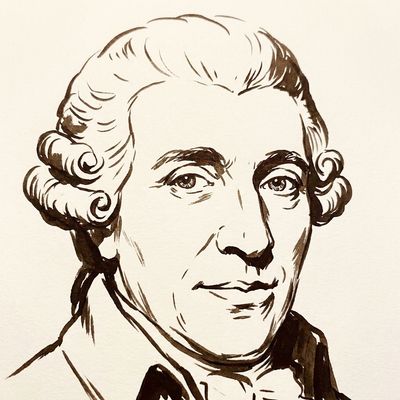
An Austrian composer who helped establish the classical forms of the symphony and string quartet.
Joseph Haydn spent much of his long career in the service of the wealthy Esterházy family, working for decades at their courts in Austria and Hungary. Relatively isolated there, as he put it, he was “forced to become original” — and he did more than almost anyone to shape the Classical style. In his final years he was celebrated across Europe, with two triumphant visits to London.
Haydn is often called the father of the symphony and the string quartet, but he also left more than fifty keyboard sonatas that trace the instrument’s development from harpsichord to early piano. His writing is clear, witty and full of surprises — sudden turns of harmony and humour that reward a player who listens closely. The textures are transparent, so every note counts.
For a learner, Haydn is an ideal introduction to Classical form: his sonatas are more modest in scale than Beethoven’s yet share the same crisp logic. The bright Sonata in C major, Hob. XVI:35, is a longtime favourite of students ready for their first full Classical sonata, and many of the shorter dances and minuets are approachable well before that.