
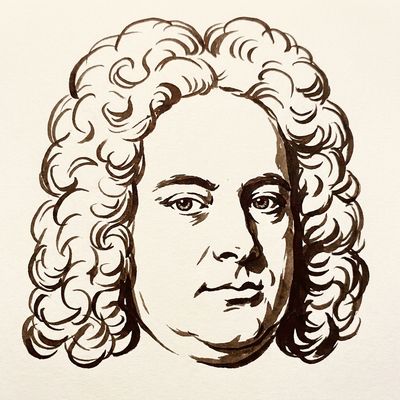
A German-born composer who became one of the leading figures of Baroque music in England.
George Frideric Handel was born in Halle, in the same year as Bach, and trained in Germany before spending formative years in Italy. In 1712 he settled in London, where he lived for the rest of his life and became a British subject in 1727. He is remembered above all as a composer for the stage and the concert hall — Italian operas, and later the English oratorios, including Messiah, that made his name.
For pianists, Handel’s keyboard suites are the heart of what he left. His writing is broad, singing and often built on dances — allemandes, courantes, sarabandes and gigues — with sets of variations that unfold a single idea with great clarity. It tends to sit more comfortably under the hand than Bach’s densest counterpoint, which makes it a welcoming way into Baroque keyboard style.
A good place to begin is one of the shorter movements from the suites: the Sarabande in D minor, grave and stately, is among the most played, and the air with variations nicknamed “The Harmonious Blacksmith” rewards a player ready for something brighter. Handel asks less for finger acrobatics than for a firm, singing line.